Wolverhampton schools project helps boys build on competitive spirit through physical activity
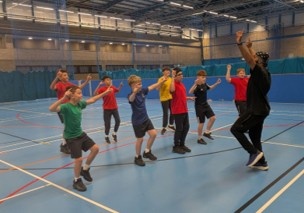
A Power Play Project in Wolverhampton primary schools has brought physical activity and mentoring together to help boys channel their competitive energy into teamwork and positive development.
The programme was designed by Wolverhampton School Games Organisers and funded by Active Black Country as part of our new approach to the School Games programme for the 2025/26 academic year.
What was delivered
The Power Play Project is a three-phase initiative supporting boys with a strong competitive spirit who were at risk of exclusion or disengagement from school.
This year’s programme built on Play Together 2025, which brought together boys in Years 4 to 6 together at Aldersley Leisure Village in Wolverhampton; they took part in Drumba, sitting volleyball, blind football and team-building exercises. The activities were designed to help pupils communicate, work together and enjoy friendly competition.
The Power Play Project carried this approach forward in April 2026, giving 76 boys in Years 3 to 6 opportunities to try a range of practical activities alongside mentoring. They took part in activities including martial arts, calisthenics, dance and an escape room.
It aimed to help pupils grow in confidence, build positive relationships and develop skills including communication, self-discipline and emotional regulation.
Pupil voices highlight impact
As part of the project, Helen Bourton, PASS Coordinator at the ConnectedEd Partnership in Wolverhampton, interviewed pupils, giving them space to share their hopes, strengths and challenges, and to help identify potential barriers to learning and inform future provision.
Among the responses:
• All pupils surveyed identified something they wanted to learn, develop or improve.
• All identified at least one way they could help at home or school.
• A number of them referred to helping others, kindness, caring or positive behaviour.
• Some shared a specific aspiration, such as developing a skill or pursuing an interest.
• Two identified difficulties with learning or concentration.
Pupils’ feedback
The interviews offered a glimpse of the boys’ hopes for themselves and their wish to make a positive contribution. One pupil spoke about helping others when they fall, while another shared an ambition: “STEM I want to be an astronaut.”
Pupils also shared some of the challenges they faced. One described struggling to focus in English, while another highlighted a lack of friends.
These responses highlighted potential barriers around learning, concentration and social connection that may otherwise remain unnoticed. The boys’ comments showed how much it matters to listen to young people and understand their individual experiences.
Future sustainability
Speaking about the project, one of the Wolverhampton School Games Organisers, Laura Penlington, said it highlighted that “physical activity can build engagement, but lasting impact requires continued support”.
Building on these initial two projects is the third phase of the initiative.
She said the Boys Move programme was developed for secondary school pupils with similar needs. Insights from the Power Play Project are helping to shape the programme, with a longer-term ambition to support young people as they move to secondary school, nurture their wellbeing and help them stay engaged with education.
Power Play has also highlighted the value of working alongside schools, offering a variety of activities and making space for young people to share their views.
Following up on pupils’ behaviour, attendance, confidence and engagement would help build a clearer picture of the work’s longer-term impact. To keep offering this support, future delivery will require further funding or support in kind for activity providers, mentoring, facilities, equipment and staff time. Partnerships with schools and local organisations could help share resources and reach future cohorts.
Laura said: “The model can be repeated by identifying pupils through schools, delivering inclusive activities and gathering pupil feedback. Introducing baseline and follow-up measures would help demonstrate long-term impact and support future funding applications.”
Latest news from Active Black Country
View all news
INSIGHT HUB
Timely data and learnings in relation to physical activity and sport in the Black Country and the added value we can offer.
WATER SAFETY PROGRAMME
Our Black Country Water Safety Programme has had a big impact since launching. Access our free resources for schools, community groups and parents & guardians to increase the number of children and families who are water safe and boost their enjoyment of swimming.